Your Cart is Empty


Mourning the loss of a loved one is a universal human experience, but the way we express grief can vary widely depending on culture and tradition. One of the most significant ways people mourn is through the colors they wear, as these hues hold deep meanings that differ across societies. From black in the Western world to white in parts of Asia, colors represent different aspects of grief, honor, and remembrance. In this article, we explore the mourning colors observed worldwide and delve into where to purchase jewelry inspired by these mourning colors.

In Western cultures, black has long been associated with mourning. This tradition dates back to ancient Rome, where the toga pulla, a dark garment made of wool, was worn to signify mourning. Queen Victoria's extensive mourning following the death of her beloved Prince Albert in 1861 further solidified black as the standard color for grief. For decades, Victorian widows wore black for extended periods, sometimes up to a year, to mark their mourning.
Today, black remains the most common color worn at funerals in countries like the United States, the United Kingdom, and Canada, although the prolonged mourning period is no longer observed. While black is still the go-to color for funeral attire, many people now wear subdued colors, reflecting a more modern and personalized approach to mourning.

In contrast to the Western tradition, many Eastern cultures use white as the mourning color. In countries like India, Cambodia, and parts of Japan, white represents purity, the cycle of life, and rebirth. For example, in Buddhist traditions, white is worn to symbolize the continuity of life after death. The mourning practice of wearing white is also seen in the funeral customs of the indigenous people of Australia, where white is worn for a mourning period of one week to several months, depending on the region.
In India, white is seen as a color of purification, especially within Hinduism, where it symbolizes the soul's journey through death and into the afterlife. Interestingly, Queen Victoria herself requested white to be part of her funeral—alongside her black mourning attire—demonstrating the blend of both mourning and celebration in her life’s end.

Red is a color that may surprise some, as it is typically associated with love and passion. However, in cultures like South Africa, red is a mourning color that reflects the bloodshed and struggles endured during the apartheid era. Red has come to represent the fight for freedom and is worn during funerals to honor those who have fallen in the struggle for equality.
In contrast, red is forbidden in Chinese funerals as it symbolizes happiness, which is antithetical to the grief of loss. However, in Ghana, red is a color reserved for immediate family members of the deceased, marking their deep personal grief.

Purple, with its deep spiritual associations, is often worn during mourning to reflect the pain and sorrow of loss. In Guatemala, purple robes are worn by men and boys during the Procession of the Holy Cross on Good Friday, symbolizing Christ’s suffering and death. Similarly, in Brazil, purple is worn alongside black to reflect the pain and spiritual suffering associated with the loss of a loved one.
In Thailand, purple is reserved for widows as a symbol of sorrow following the death of their spouse, although black is worn by other mourners.

Gold, often associated with wealth and eternity, holds special significance in ancient Egyptian mourning practices. The ancient Egyptians believed that the souls of the deceased would journey to the afterlife, and gold was seen as a representation of divine strength and immortality. Pharaohs and royalty were often buried with gold artifacts, including death masks, to ensure their safe passage to the afterlife.
Today, while gold is no longer a prevalent mourning color, its significance as a symbol of eternity remains strong, particularly in funerary practices and memorial jewelry.

In Papua New Guinea, mourning practices are unique in their use of grey. Widows apply a grey clay to their skin as part of the mourning ritual, symbolizing their loss. The practice is combined with the wearing of numerous grey necklaces, which are gradually removed over a period of months. The final loop is removed once the mourning period has concluded, marking the end of their grief.
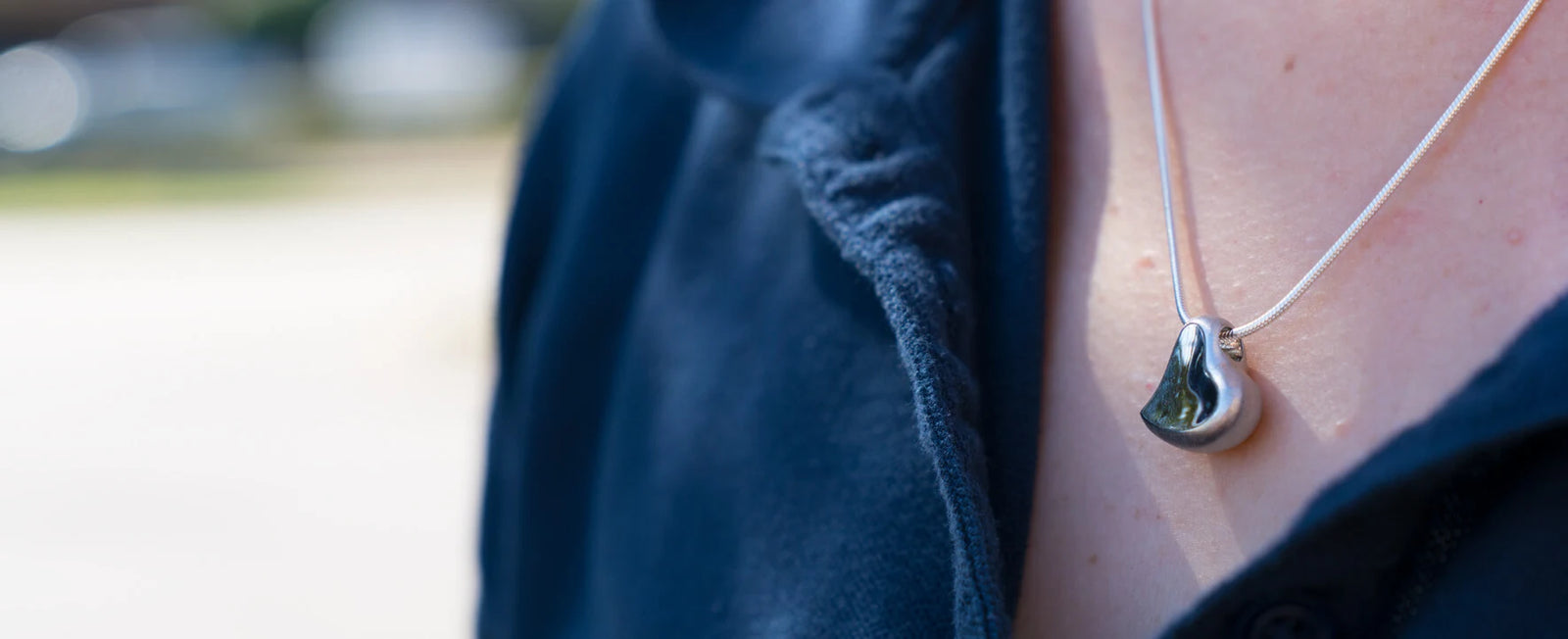
Mourning colors are deeply symbolic, and they extend beyond clothing to the jewelry we choose to memorialize our loved ones. At GetUrns, we offer a collection ofcremation jewelry, including ashes pendants andmen’s cremation jewelry, allowing you to carry a tangible piece of your loved one with you while honoring the traditions and cultural significance of mourning colors.
Our collection is inspired by the rich cultural meanings behind various mourning colors. Whether you're seekingblack mourning jewelry,purple wings of hope pendants, orgold cremation urn necklaces representing eternity, our jewelry pieces are designed to serve as a lasting tribute to your loved one.
Each piece is carefully crafted to reflect the deep emotional significance behind the colors of mourning, ensuring you find the perfect way to commemorate the memory of someone special.
Mourning colors are a powerful way to express grief, honor a lost loved one, and connect with cultural traditions. Whether it's black in the West, white in the East, or red in South Africa, each color carries a deep, symbolic meaning. Understanding these colors and their significance in different cultures allows us to appreciate the diverse ways in which people mourn. And for those seeking to remember a loved one, choosing jewelry inspired by these colors can provide a meaningful and lasting tribute.