Your Cart is Empty



GLU-BA141

| Capacity | 257 cu. Inches |
| Dimensions | 9.25"L 9.25"W 7.48"H |
| Material | Clay |
| Opening | Lid on top - to be glued |
| Size | Round Adult Urn |
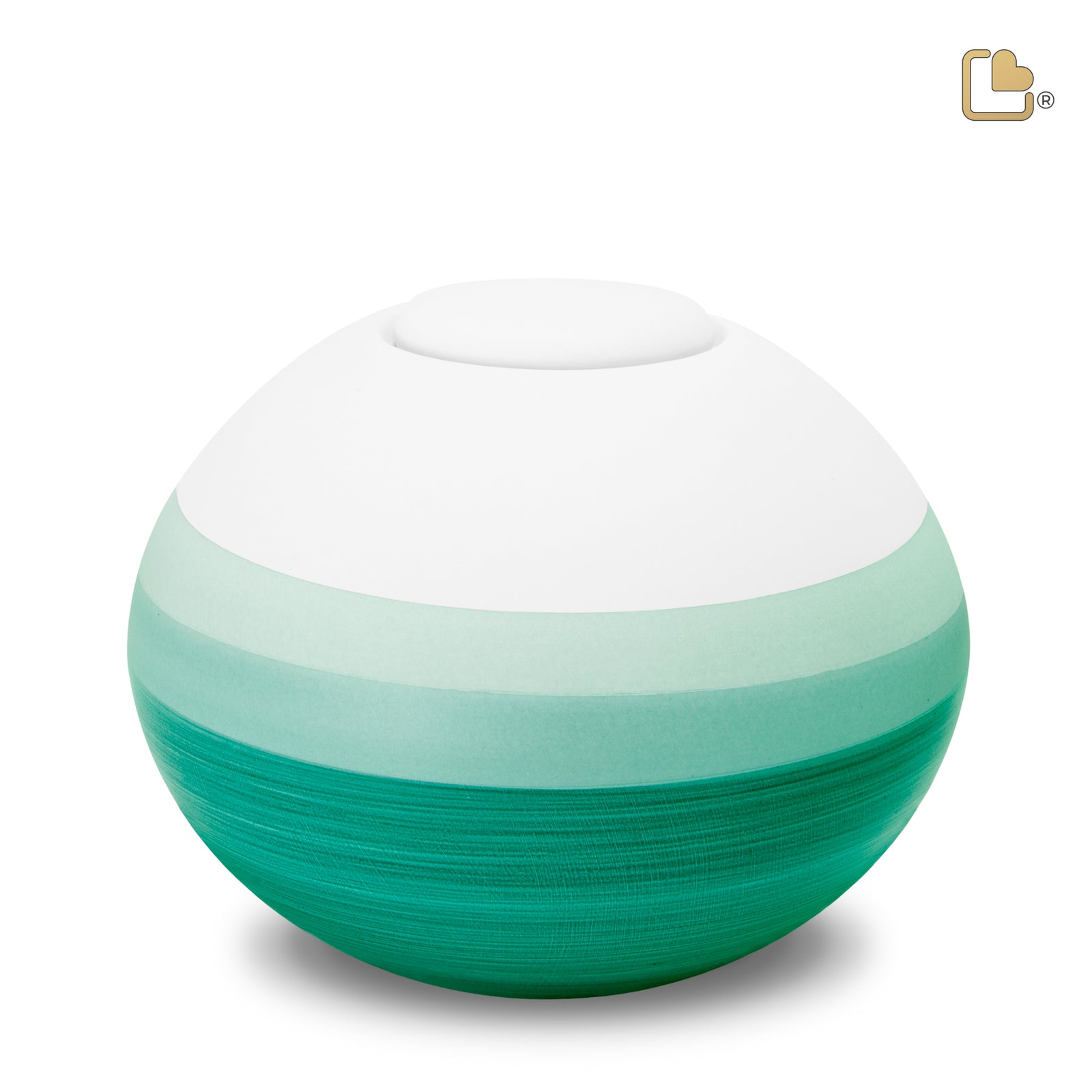
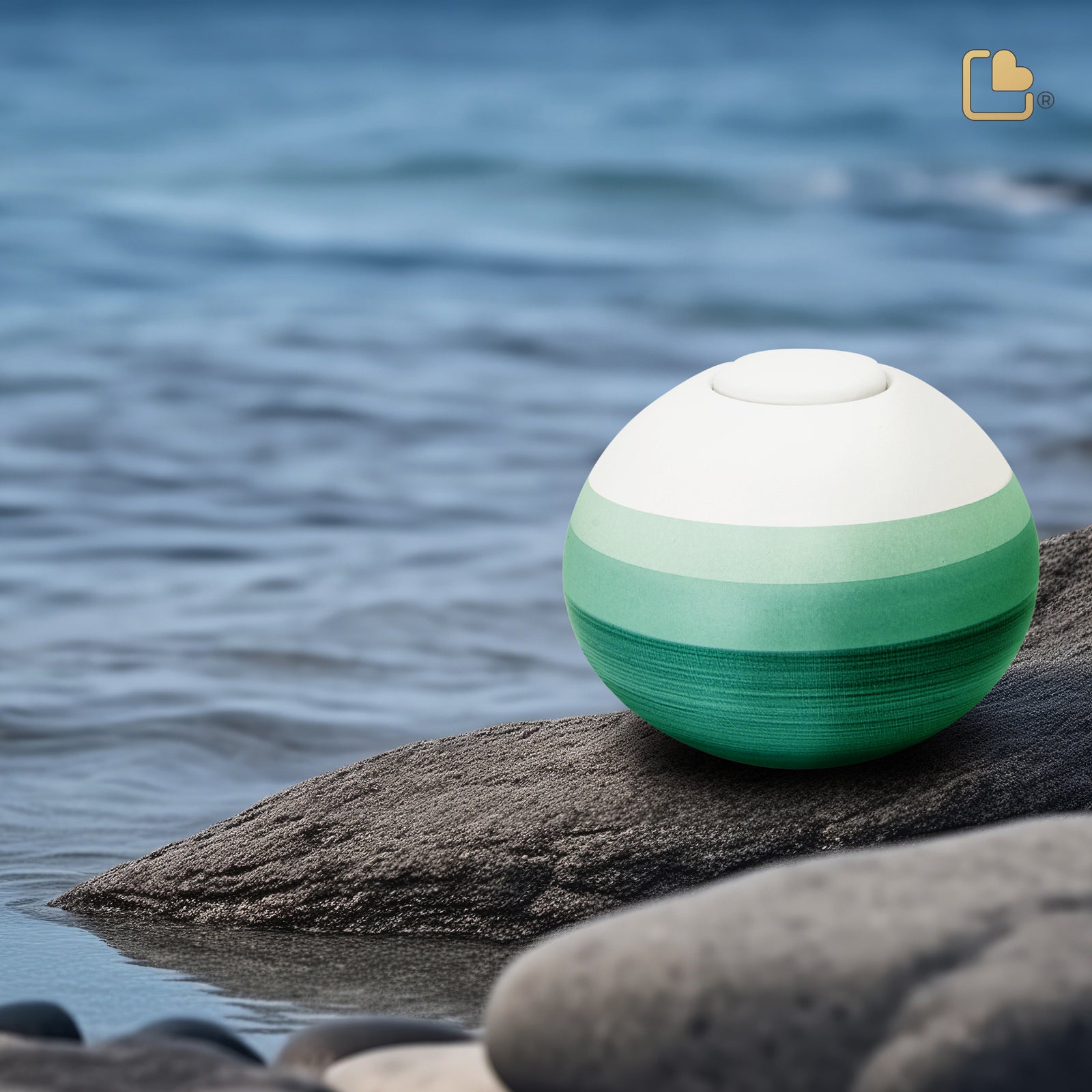
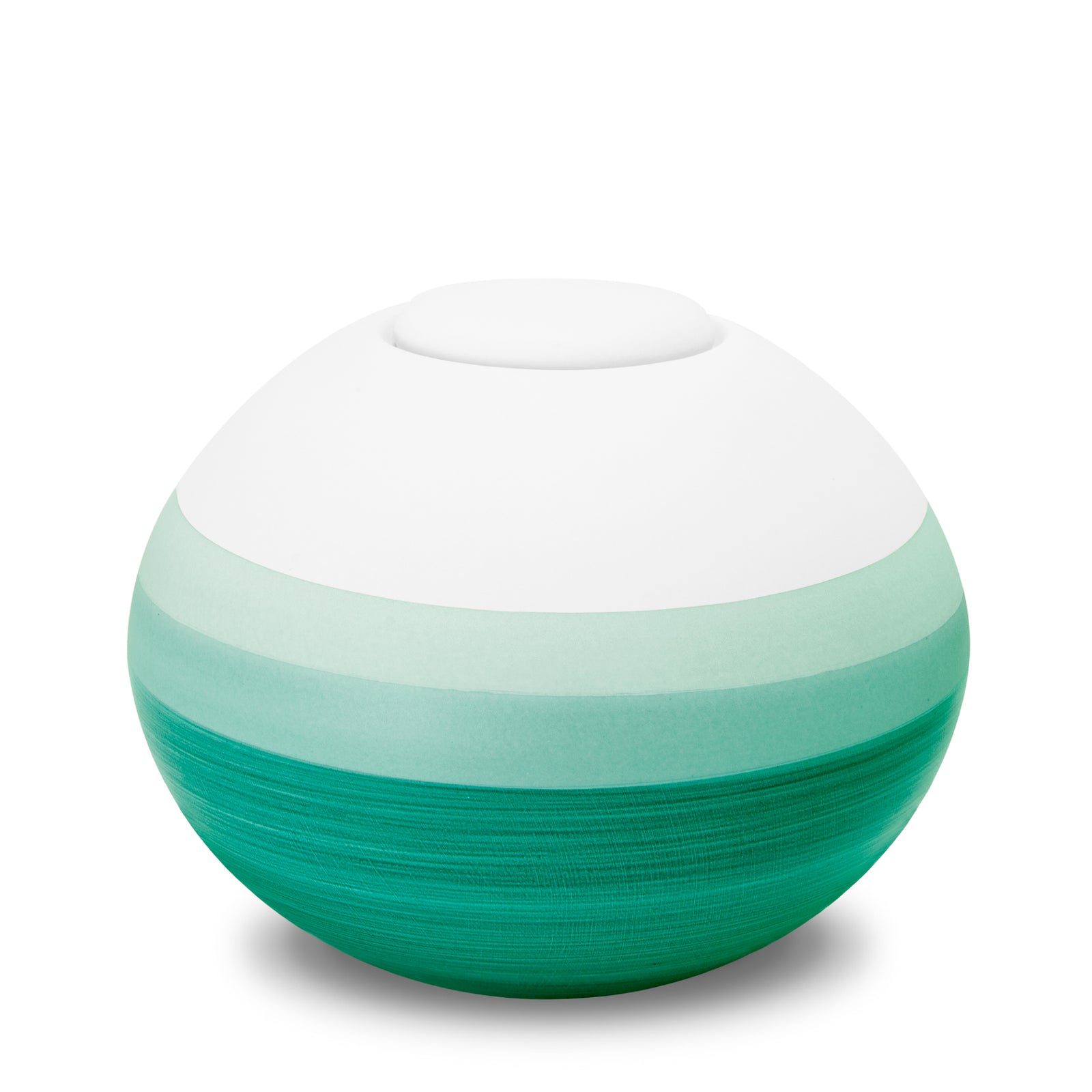
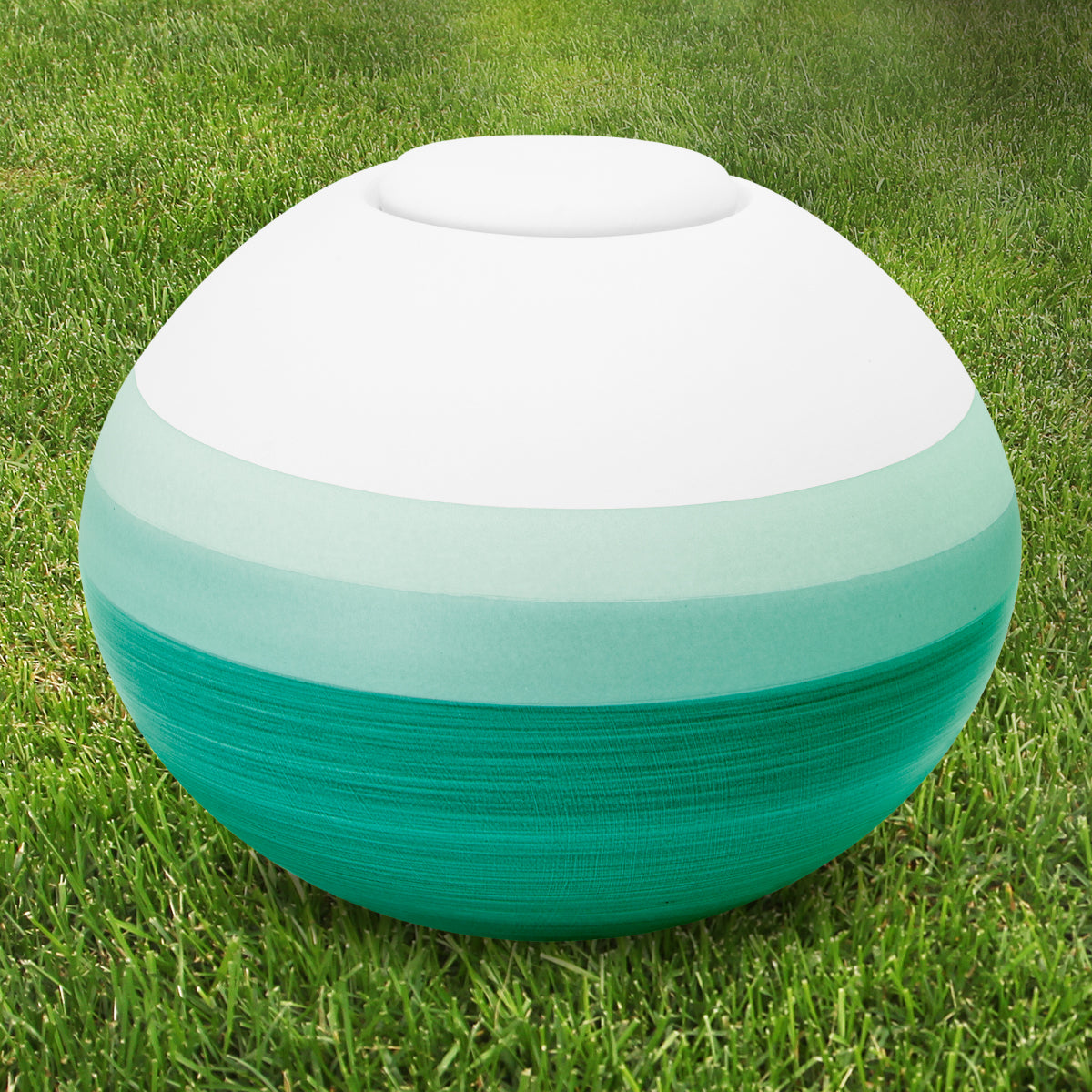
The Mint™ Round Adult Urn Eco is an arresting tribute to the memory of your loved one. This spherical urn features thick horizontal lines in a range of colors, starting with a vivid bright lime green hue and gradually lightening all the way to white. The spherical shape of this urn for human ashes creates a sense of continuity and wholeness, providing a fitting final resting place for someone who was dearly loved and will be deeply missed.
Made from biodegradable clay for one-time use, this adult cremation urn not only has an attractive design but is also eco-friendly. It offers a serene and significant farewell, ideal for a water or direct burial.
The Mint™ Round Adult Urn Eco is a memorable way to honor your loved one. The bright tangerine color creates a sense of hope and optimism, making it a fitting tribute to someone who lived their life with passion and energy. Its unique one-use design provides a sense of optimism, making it a fitting tribute to someone who loved and cherished the nature surrounding them. By choosing a biodegradable urn, you are also leaving a positive environmental impact and preserving the beauty of the earth for future generations to enjoy.
A biodegradable urn is a type of cremation urn designed to naturally break down in soil or water, allowing cremated remains to return to nature with minimal environmental impact. These urns are commonly made from eco-friendly materials like paper, salt, sand, or plant-based fibers. Many biodegradable urns also use natural dyes and non-toxic adhesives to keep the urn completely earth-safe.
The amount of time a biodegradable urn takes to decompose depends on the material and where it’s placed. Some biodegradable urns dissolve in water in just a few hours, while others may take weeks or even months to break down in the ground.
For example, sand-and-gelatin urns may dissolve within days (or even hours) in water, but could take 2–3 months in soil. Paper biodegradable urns may float briefly before sinking and can biodegrade in less than 24 hours in water.
Yes, you can bury a biodegradable urn in the ground, and many families choose this option as part of an eco-friendly memorial. Ground burial is often simplest on private property, where the urn can be placed near a tree, garden, or memorial plant.
Some cemeteries also allow biodegradable urn burial, particularly those with green burial sections. If you’re unsure, a funeral director or local cemetery can confirm what is permitted. For burials on public lands, such as state or national parks, you’ll need to contact the managing agency to check regulations.
A biodegradable urn for water burial is designed to float briefly and then dissolve naturally, allowing ashes to be released in a respectful way. These urns may be used in oceans, seas, and sometimes large inland waters depending on local laws.
In the United States, the Environmental Protection Agency (EPA) provides guidance for burial at sea, including:
Families may conduct the ceremony from their own boat or hire a charter. Many cruise lines also offer burial at sea services.
The time it takes for a biodegradable urn to dissolve in water depends on the urn’s material:
Water conditions such as temperature, currents, and salinity can also affect the timing.
Yes, it is generally legal to scatter cremated ashes in the ocean, either by releasing ashes directly into the water or by using a biodegradable urn designed for burial at sea.
In the U.S., the EPA requires that ocean scattering or water burial occur at least three nautical miles offshore. They also request that families notify the agency within 30 days after the burial.
No — human ashes do not dissolve in water and do not biodegrade. Cremated remains are made primarily of processed bone fragments and minerals such as calcium phosphates. When placed in water, ashes will not float and will remain as solid particles rather than dissolving like biodegradable materials.